UN INT Intro Text w/ Responsive Image - *Important Note* You must UNLINK this shared library component before making page-specific customizations.
June 22, 2018
Update: In response to PETA's complaint regarding rogue experimenter Kurt Albertine's use of an unauthorized pulmonary test procedure on at least 21 sheep, including a lamb who died as a result (see more information below), the U.S. Department of Agriculture (USDA) has issued a citation to the University of Utah. The USDA considers failure to disclose all procedures performed on animals to a university's Institutional Animal Care and Use Committee—which is charged with ensuring adherence to federal regulations and guidelines—a grave violation. This citation should be just the first step. Now, the university must keep Albertine from harming any more animals. He should lose his federal funding as well as his keys to the laboratory.
New documents reveal that the University of Utah has repeatedly violated federal animal welfare laws and guidelines that regulate the treatment of animals in its laboratories. As reported in the Salt Lake Tribune, these inexcusable incidents have led to the suffering and deaths of monkeys, rabbits, lambs, rats, and mice. Even though experimenters have flagrantly ignored even the minimal rules offering some protection to animals, they have escaped punishment, and the university has been allowed to keep all the taxpayer funds squandered on botched experiments that hurt and killed animals.
A Lamb Dies in an Unapproved Test
On April 6, 2017, a 2-month-old lamb became the victim of rogue experimenter Kurt Albertine, records show. This baby was to be subjected to a pulmonary function test—but Albertine had never received approval to perform this procedure from the university’s animal use oversight committee. Such approval is mandatory for all experiments. Nor did Albertine have permission to use the drug methacholine, which can cause cardiac arrhythmia. Almost immediately after being administered the drug, the lamb began experiencing labored breathing and died. A necropsy indicated that the cause of death was cardiac arrest. A subsequent internal investigation by the university revealed that at least 20 other lambs had been forced to undergo this unapproved experimental procedure.
Despite these violations of both university policy and federal regulations, Albertine has been allowed to keep the $449,072 grant of taxpayer money that he received from the National Institutes of Health.
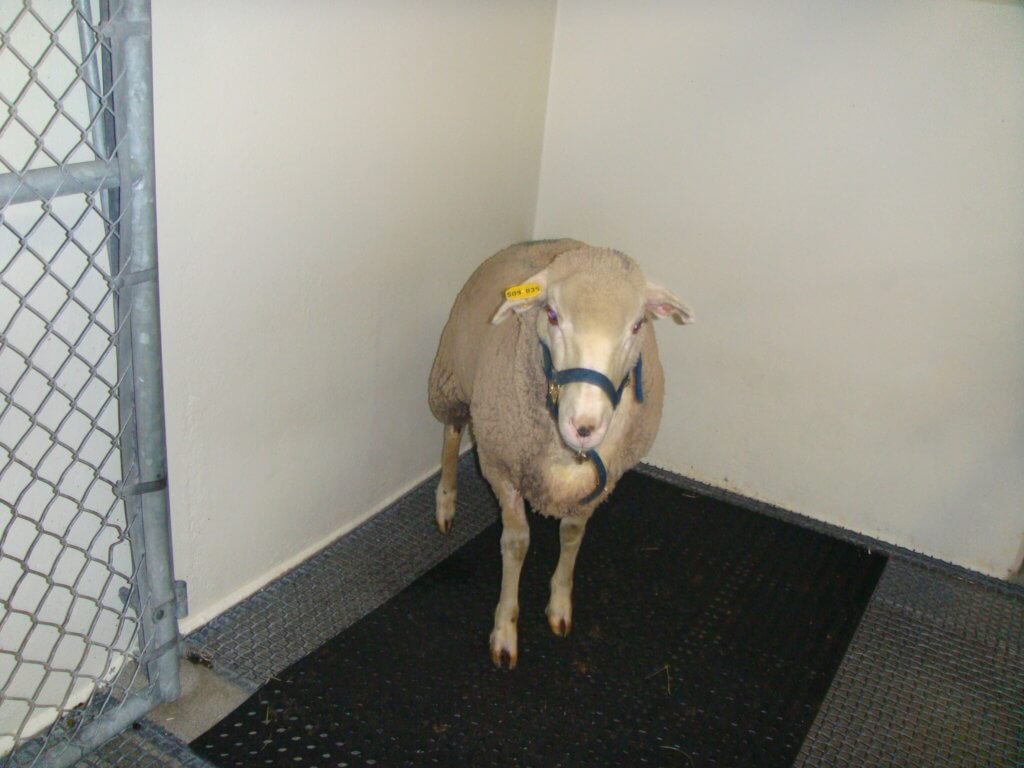
Photo from PETA’s 2009 eyewitness investigation
A Monkey Is Tortured and Killed in the Laboratory of Alessandra Angelucci
On December 21, 2015, a marmoset monkey underwent a grueling, highly invasive surgery and neurological recording session in the laboratory of Alessandra Angelucci. Laboratory staff attempted for up to three hours to find a vein in order to insert an IV catheter into the monkey for delivery of fluids, a standard and usually straightforward procedure when inducing anesthesia. When they couldn’t manage to accomplish this, the experimenters—who aren’t veterinarians—recklessly decided to proceed with their surgical plans anyway, which included removing a portion of the monkey’s skull and inserting electrodes into his brain. During periods when he was awake for invasive neurological recording, he was repeatedly and painfully injected with ketamine, which would have been woefully inadequate for managing pain, and a paralytic agent to stop eye movement. After the torturous 14-hour surgery and recording procedure, he was dumped back into his cage, where laboratory staff reported that he was “groggy” and not eating or drinking. Less than 24 hours later, he was dead.
A PETA expert veterinarian reviewed the records from this incident and concluded that the monkey “most certainly suffered as a direct result of the experimenters, who caused his death due to improper administration of anesthetic drugs, failure to administer proper physiological support during and after anesthesia, failure to maintain body temperature … and failure to provide adequate analgesia for painful procedures.”
In September of 2017, the USDA found that this incident constituted a “critical” violation of the federal Animal Welfare Act, the most severe violation that can be identified by an inspector. But so far, the university has been allowed to keep all the federal grant money that it was awarded for this project, despite breaking the law, botching a surgery, and killing a monkey through negligence.
In just one recent year alone, Angelucci’s cruel experiments have cost taxpayers $510,000.
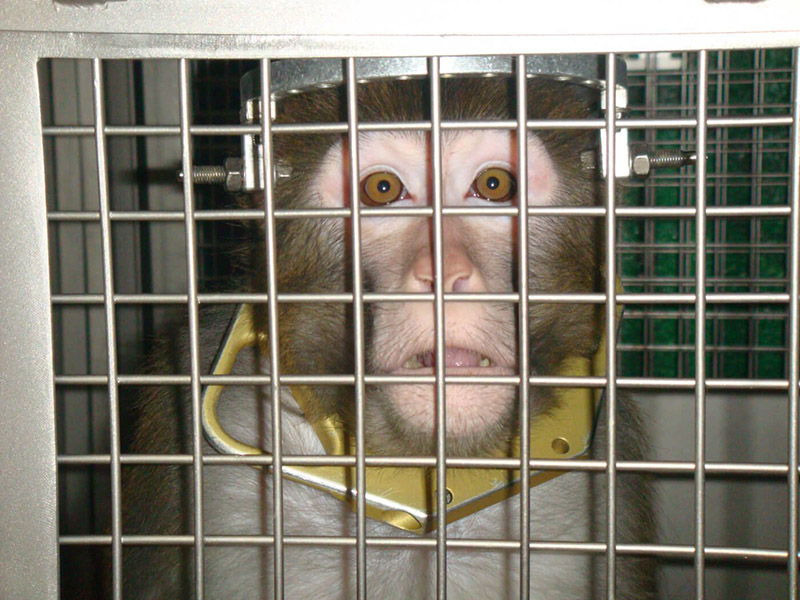
Photo from PETA’s 2009 eyewitness investigation
Two Rabbits Undergo 'Prolonged' Euthanasia in Laboratory of Robert Marc
Staff in Robert Marc’s laboratory planned to kill two rabbits by placing them each in a box and filling it with isoflurane, an inhalant commonly used to induce anesthesia. After 20 minutes, one of the rabbits was still alive, and showed no signs of impending death. So they decided to kill the rabbit with urethane—a carcinogenic agent that is expressly labeled “unacceptable” by the American Veterinary Medical Association’s (AVMA) Guidelines on Euthanasia because it causes a prolonged and painful death. They then proceeded to use the same inhumane technique to kill the second rabbit.
In only one year of funding, Robert Marc’s experiments received $543,711 in taxpayer money.
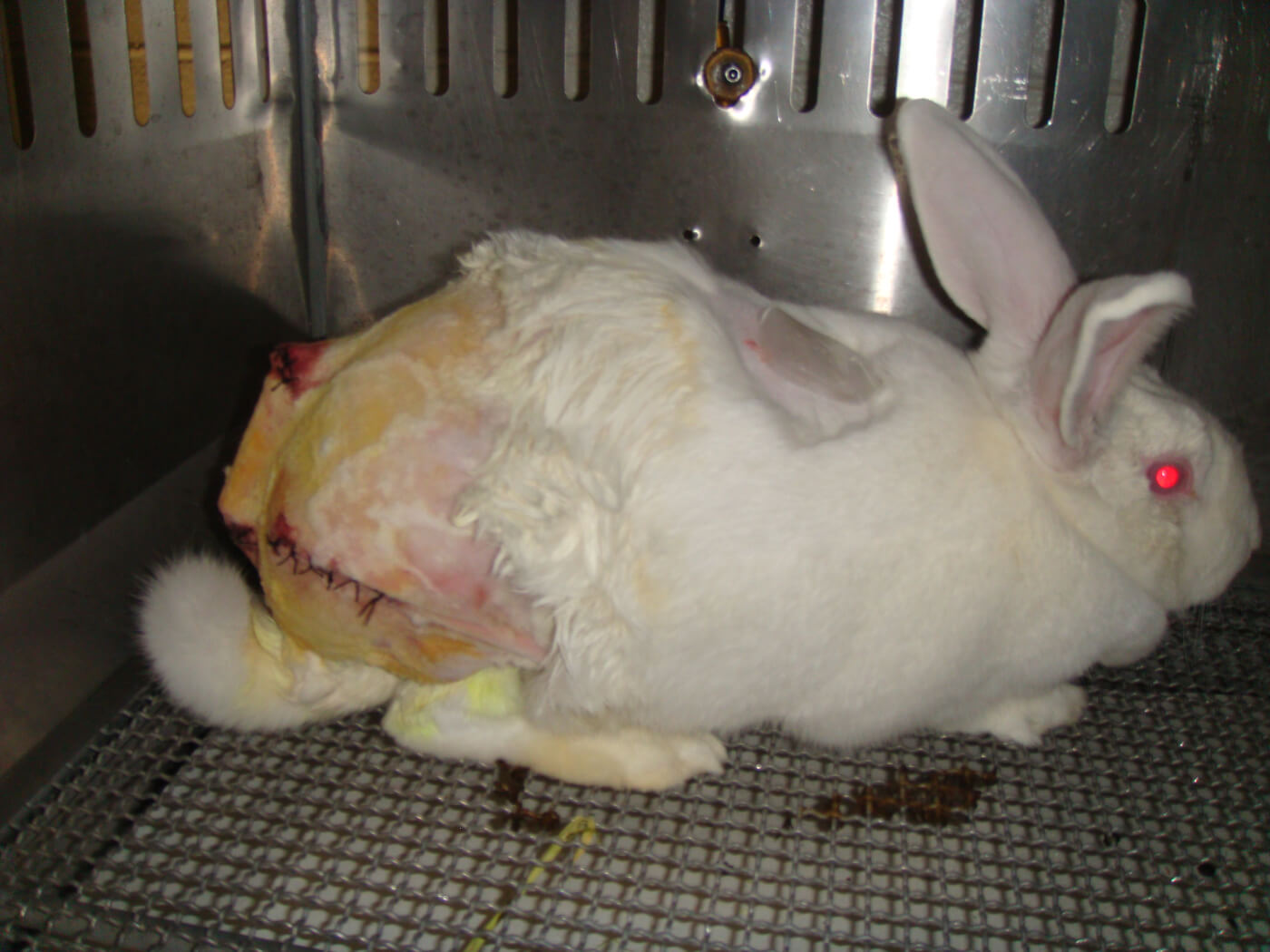
Photo from PETA’s 2009 eyewitness investigation
You Can Help Stop This!
PETA has filed a complaint with the USDA over these recent incidents as well as complaints with the agencies that have funded the experiments. We are asking that authorities punish the university and that the institution be compelled to repay taxpayer funds that were awarded during these periods of flagrant rule violations.
While pressure from PETA has already led to remarkable changes at the University of Utah, the school's continued disregard for the lives of sentient beings has apparently created a culture of noncompliance with welfare regulations. It's high time that the experimenters at this institution faced actual, tangible consequences for such unethical practices.