UN INT Intro Text w/ Responsive Image - *Important Note* You must UNLINK this shared library component before making page-specific customizations.
Frequent detection of nasty diseases among monkeys caged at the University of Washington’s National Primate Research Center, which recently dropped “Primate” from its name, pose a direct threat to public health.
Cases of Shigella, Campylobacter, and Salmonella, all highly contagious pathogens capable of infecting humans, have been documented in monkeys at the center. These pathogens can cause severe bacterial infections, accompanied by diarrhea, vomiting, fever, and/or stomach pain in humans.
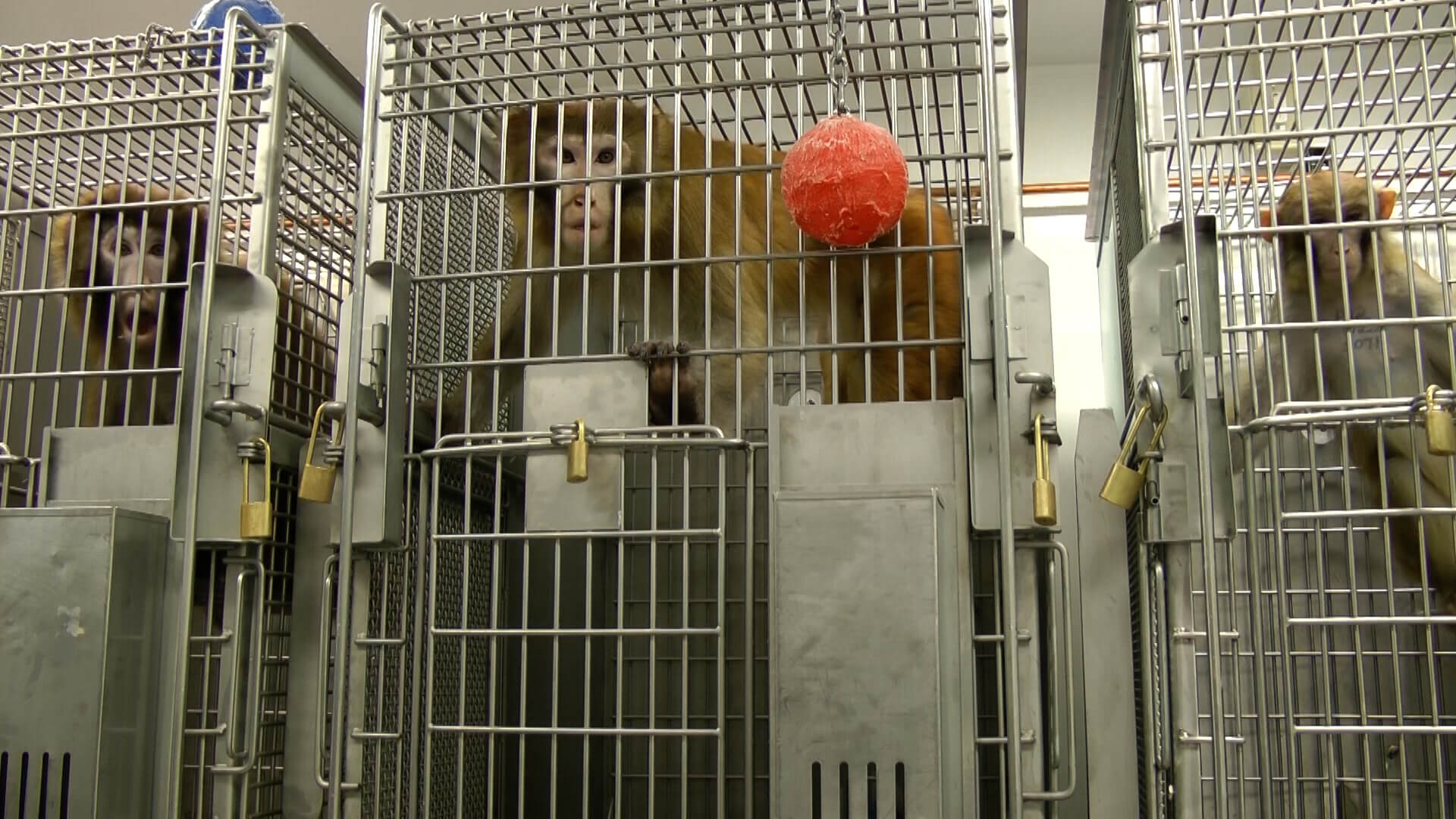
Yet the Washington State Board of Health does not require reporting of these infections when they occur in monkeys; reporting is only required when they are detected in humans. The result is a double standard: the same pathogens are tracked once they reach people, but not while they are circulating and amplifying inside a large primate facility physically connected to a major medical center.
PETA aims to close that gap.
PETA, Northwest Animal Rights Network, and the Physicians Committee for Responsible Medicine submitted a first-of-its-kind petition urging the Washington State Board of Health to require mandatory reporting of contagious diseases detected in primates used for experimentation.
The petition asks the board to update its administrative code to begin tracking dangerous pathogens detected in the center’s monkeys. The board now has 60 days to decide how to proceed.
While it's surprising that the state health board doesn't track serious monkey infections, it's simply confounding, given that the University of Washington Medical Center is physically connected to buildings caging monkeys. The two facilities share hallways and air systems. Staff move through both facilities.
PETA has identified evidence—published years ago—that the center’s staff have contracted Methicillin-resistant Staphylococcus aureus (MRSA) from monkeys, confirming that this pathogen is present in the colony and that transmission to humans has already occurred. The condition can cause skin infections and other severe problems. Plus, a university representative previously admitted that “virtually everyone” gets ill within their first six months working at the center because of exposure to infectious diseases and the amount of fecal matter in the air.
Get Involved!
Keeping people safe from transmissible diseases is serious business, and the gaping hole created by failing to track these pathogens in monkeys must be closed.
Please sign PETA’s petition today to urge the Washington State Board of Health to act on the petition for rulemaking immediately and keep Washingtonians healthy and safe.
We’re bringing petition signatures to a meeting with decision makers on June 4th. Please sign now so that your name is included!